| Special Notices |
|
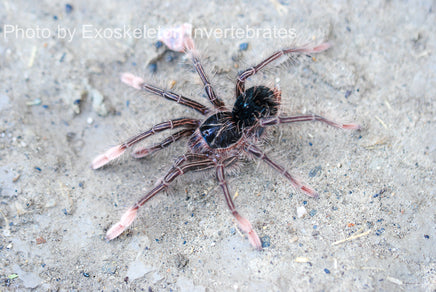
A true giant of the tarantula world. Theraphosa blondi holds the famous size and mass records, but T. apophysis can reach similarly enormous dimensions while adding the distinctive pink-footed juvenile coloration that gives this species its name.
Starting with a baby? A FREE sling container is available if
requested at checkout. It is not automatically included.
Visit my Urban Tarantulas YouTube channel
for care, setup, feeding, and show-and-tell videos to see how we keep and feed our
tarantulas.
|
| Care Details |
|
🌡️ Temperature: A practical captive range is about 72–80°F (22–27°C). Stable room temperatures work well, and a deep burrow allows the spider to retreat from warmer surface conditions.
💧 Humidity: This moisture-dependent giant should not be allowed to dry out completely. Keep the lower substrate consistently moist while allowing the surface to dry somewhat, provide good ventilation and constant clean water, and avoid stagnant, swamp-like conditions.
|
| 🏠 Housing |
|
Babies / Slings: Even slings start relatively large and appreciate more room than typical sling setups. Provide deep moist substrate, a starter burrow or cork retreat, good ventilation, water access, and minimal fall distance.
Juveniles: Juveniles grow quickly and need increasing floor space with several inches of deep, moisture-retentive substrate. Provide a cork-bark retreat, water dish, ventilation, and enough depth for substantial burrow construction.
Adults: Adults require a large terrestrial enclosure with extensive floor area, very deep compactable substrate, a substantial retreat, clean water, and good ventilation. Keep overhead clearance low because these spiders become exceptionally heavy-bodied.
|
| 🍽️ General Diet |
|
Offer appropriately sized crickets and suitable roaches such as Dubia, Red Runner, or Lobster roaches. Slings readily take small invertebrate prey or appropriately sized pre-killed prey, while rapidly growing juveniles and adults can handle substantially larger feeders.
Adjust portions and feeding frequency according to life stage, abdomen condition, and feeding response rather than overfeeding for maximum size. Remove uneaten prey and boluses, and withhold live feeders when a molt appears imminent.
|
| In-depth Facts |
| 🕷️
Scientific Name |
Theraphosa apophysis (Tinter, 1991)
View Theraphosa apophysis in the World Spider Catalog
Explore current taxonomy, distribution, and scientific references.
|
| 📛 Common Names |
Pinkfoot Goliath Birdeater; Goliath Pinkfoot Tarantula. |
| 🌡️ Temperature |
About 72–80°F (22–27°C), with stable temperatures and protection from overheating. |
| 💧 Humidity |
Moist lower substrate with a somewhat drier surface, good ventilation, and continuous access to clean water. |
| 📍 Locale |
Colombia, Venezuela, and Brazil. |
| 🏷️ Category |
New World terrestrial and opportunistic burrower; a massive, heavy-bodied ground-dwelling species. |
| 📏 Adult Size |
Females: Approximately 9–11+ in (23–28+ cm) DLS in exceptionally large specimens.
Males: Approximately 8–10+ in (20–25+ cm) DLS, generally leggier and lighter-bodied than mature females.
DLS means diagonal leg span. These
are general species notes, not the size of the specimen offered.
|
| 🪶 Urticating Hairs |
Yes—if disturbed, they can flick urticating hairs as a natural defense. Individual responses vary. Theraphosa hairs can be particularly irritating, so avoid direct exposure. |
| ⏳ Growth Rate |
Fast; this giant species can put on substantial size between molts under appropriate captive conditions. |
| 🧭 Lifespan |
Females: Approximately 12–18+ years in captivity.
Males: Approximately 4–6 years total lifespan in captivity.
Captive keeper estimates of total
lifespan, not years remaining after purchase.
|
| 🍽️ Feeding |
Appropriately sized crickets and suitable roaches; generally a strong eater, with portions adjusted to life stage, body condition, growth, and molt cycle. |
| 🎯 Recommended Level |
Best suited to keepers prepared for an exceptionally large, fast-growing terrestrial with significant moisture requirements, irritating urticating hairs, powerful feeding responses, and the enclosure space required by a true giant. |
| Follow Me on Social Media |
|
🎁 Follow me on social media and receive an
additional freebie*
*Email me after you follow to let me know you’re a
follower so I can include it.
|
| Safety Disclaimer |
| Tarantulas
can bite. Enjoy observing your tarantula and use secure transfer methods during
maintenance. Handling is at your own risk. Always prioritize your safety and the
tarantula’s well-being. Theraphosa species can produce especially irritating urticating hairs, so avoid direct exposure and use deliberate, hands-off maintenance. |